
The Rubik’s Cube is a three-dimensional combination puzzle that has captivated millions worldwide since its inception. Known for its colorful squares and intricate mechanics, the cube presents a challenge that combines logic, spatial reasoning, and dexterity.
With over 500 million units sold globally, it stands as the best-selling puzzle game and toy of all time. Beyond being a mere toy, the Rubik’s Cube has evolved into a cultural phenomenon, inspiring competitive speedcubing, artistic expression, and even academic studies.
The Rubik’s Cube was invented in 1974 by Ernő Rubik, born on July 13, 1944, a Hungarian architect and professor of architecture. Originally named the “Magic Cube” (Hungarian: Bűvös Kocka), it was designed as a teaching tool to help students understand three-dimensional geometry. Rubik applied for a patent in Hungary in January 1975, and by 1977, the cube was being manufactured locally.
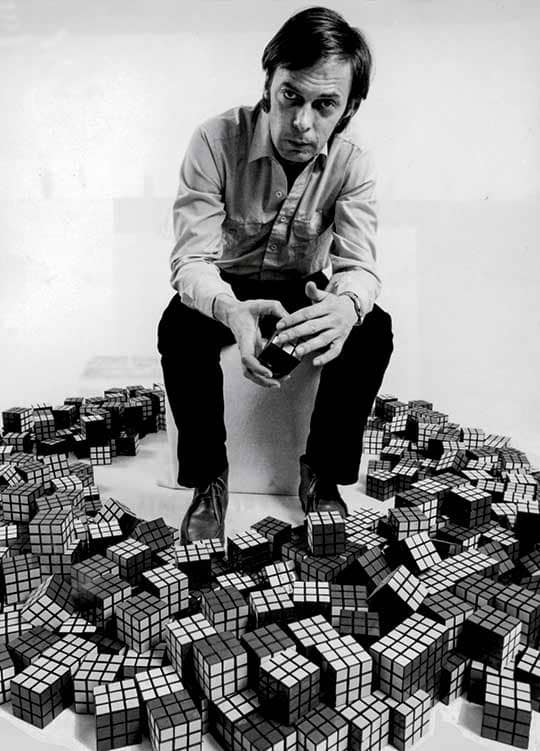
In 1980, the cube was licensed for international distribution by Ideal Toy Corporation, leading to its global release. The puzzle quickly gained popularity, becoming a staple of the 1980s toy market.
Its unique design and challenging nature captured the imagination of people across various age groups and backgrounds. The Rubik’s Cube received numerous accolades, including the 1980 German Game of the Year award for Best Puzzle.
As the years passed, the cube’s appeal continued to grow. It became a symbol of ingenuity and problem-solving, inspiring books, movies, games, and even competitive events.
By 2024, it is estimated that around 500 million cubes have been sold worldwide, solidifying its place in toy history and making it a timeless emblem of creativity.
The world of speedcubing has seen remarkable achievements since the cube’s introduction. Speedcubing competitions emerged in the early 1980s, with enthusiasts racing against the clock to solve the puzzle as quickly as possible.

As of October 2024, the current world record for solving a standard 3×3 Rubik’s Cube stands at an astonishing 3.13 seconds, set by Max Park at the Pride in Long Beach event on June 11, 2023.
Numerous formats of competition have evolved over time, including blindfolded solves, one-handed solves, and solving larger cubes like the 4×4, 5×5, and even more complex variations such as the 7×7 and 17×17 cubes.
These endeavors have fostered a vibrant community of cubers who share techniques, algorithms, and strategies online, contributing to the puzzle’s continuing evolution.
The Rubik’s Cube has also inspired records beyond speedcubing; for example, in 2021, a team of cubers set a record for solving multiple cubes simultaneously while juggling them—showcasing the cube’s versatility as both a puzzle and an art form.


Additionally, fun events such as the Rubik’s Cube World Championship and various online competitions continue to excite both newcomers and veteran cubers alike.
From its humble beginnings as an educational tool to its status as a global icon, the Rubik’s Cube has left an indelible mark on popular culture. Its blend of simplicity and complexity continues to challenge and inspire people worldwide.
Whether you’re a beginner learning your first algorithms, a casual puzzler enjoying the meditative aspect of solving, or an experienced speedcuber aiming for world records, the Rubik’s Cube remains a timeless puzzle that invites exploration, creativity, and community.
As it celebrates its legacy, the cube shows no signs of losing its enigmatic charm, continuing to intrigue and unite enthusiasts of all ages.
